
 English
 中文简体
中文简体 عربى
عربىFan Iron Cover
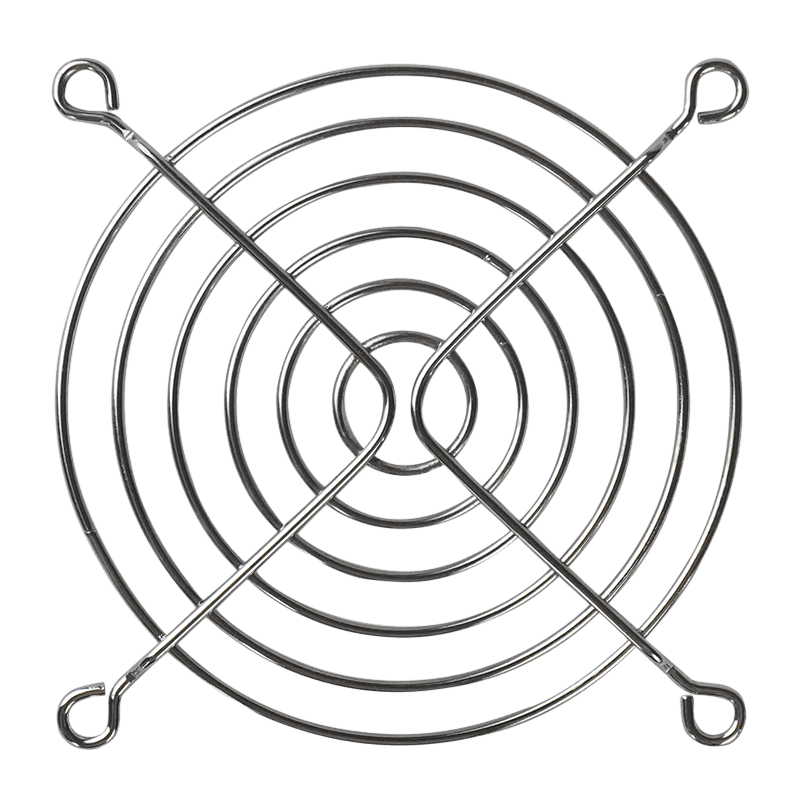
The Fan Iron Grill Guard serves as a critical accessory, prioritizing safety and func...
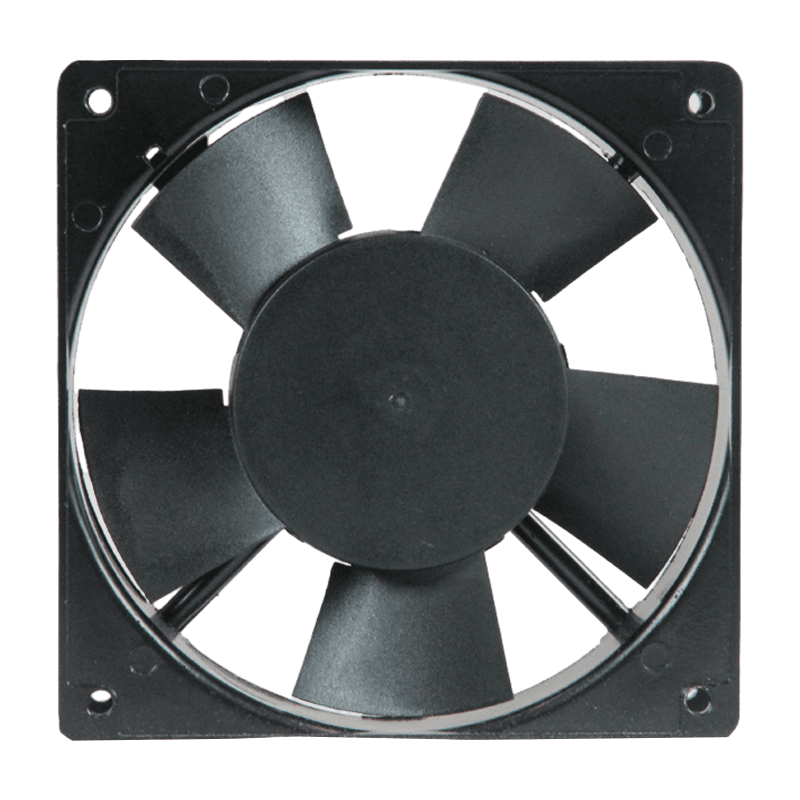
Understanding the fundamental technology behind EC fans is essential for appreciating their role in modern cooling applications. The term "EC" refers to the electronic commutation method used in these motors.
Basic Operating Principle
An EC fan integrates a brushless DC motor with an internal electronic control board that converts incoming AC power to DC. The motor uses permanent magnets on the rotor and electromagnetic windings on the stator. Electronic sensors detect the rotor position, and the control board switches current to the appropriate windings to maintain rotation. This electronic switching replaces the mechanical brushes and commutator found in traditional DC motors.
The integrated electronics also allow the motor to accept standard AC power (typically 115V or 230V) directly, eliminating the need for separate external drives or controls in many applications. The fan appears to the user as a simple AC-powered device but operates internally as a controlled DC motor.
Efficiency: AC induction motors operate at a fixed speed determined by the line frequency and motor pole count. They have inherent losses, including rotor slip and eddy currents. EC motors maintain high efficiency across a wide speed range because the rotor uses permanent magnets, eliminating the energy consumed by inducing magnetic fields in the rotor. Typical efficiency improvements range from 20 to 50 percent compared to equivalent AC fans.
Speed Control: Traditional AC fans require external devices such as variable frequency drives, autotransformers, or triac-based speed controllers to adjust speed. These external controls add cost and complexity. EC fans have built-in speed control capability. They can accept various control signals, including 0-10V DC, PWM (pulse width modulation), or potentiometer input, allowing precise speed adjustment without additional components.
Power Factor: AC induction motors typically have a lagging power factor, meaning they draw current that is out of phase with the voltage, reducing electrical system efficiency. EC fans incorporate power factor correction circuitry, typically achieving a power factor of 0.95 or higher, which reduces strain on electrical distribution systems.
Starting Current: AC motors draw high inrush current during startup, often several times their running current. This can cause voltage dips and stress electrical components. EC fans have controlled starting with minimal inrush current, typically less than running current.
The adoption of EC fans continues to grow across various industries due to several quantifiable benefits that impact operating costs, system design, and maintenance requirements.
Energy Savings and Payback Period
The significant advantage of EC fans is reduced energy consumption. In continuous operation applications such as refrigeration condensers, HVAC air handlers, or electronics cooling, the energy savings can be substantial.
A typical EC fan might consume 60 to 70 watts to deliver the same airflow as a standard AC fan consuming 100 watts. This 30 to 40 percent reduction in power consumption translates directly to lower electricity bills.
The payback period for the higher initial cost of EC fans varies by application and operating hours. For fans running continuously, payback periods of one to three years are common. For intermittent operation, the payback period extends accordingly. Facility managers typically calculate return on investment based on local electricity rates and annual operating hours.
Speed Control Capabilities
EC fans offer infinitely variable speed control over a wide range, typically from 0 to 100 percent of rated speed. This allows precise matching of airflow to demand, which further enhances energy savings in variable-load applications.
The built-in control electronics can accept signals from therats, pressure sensors, humidity sensors, or building management systems. This enables demand-based operation, where the fan runs at minimum speed under light load and increases speed only as needed.
Multiple EC fans can be synchronized or operated independently with individual control signals, allowing sophisticated airflow management without complex external controls.
Reduced Heat Generation
Because EC motors operate more efficiently, they waste less energy as heat. This has multiple benefits:
In cooling applications, less motor heat is introduced into the airstream, improving overall system efficiency.
In enclosed equipment, reduced heat output lowers the cooling load on the system.
Lower operating temperatures extend the life of motor components, particularly bearings and electronics.
Quiet Operation at Reduced Speeds
The noise produced by a fan is directly related to its speed. Because EC fans can operate at lower speeds when full airflow is not required, they produce significantly less noise during much of their operating cycle.
The electronic commutation also eliminates the magnetic hum associated with AC motors operating under load.
For noise-sensitive applications such as office buildings, hospitals, or residential HVAC, this characteristic is particularly valuable.
Compatibility with existing equipment and infrastructure is a practical concern for those considering retrofitting or specifying EC fans. In cases, integration is straightforward, but certain considerations apply.
Electrical Compatibility
Many EC fans are designed to accept standard AC line voltages. Common options include 115V, 230V, and 277V models, matching the voltages found in commercial and industrial installations. The user simply connects line voltage to the fan's power input terminals, just as with a standard AC fan.
For speed control, EC fans typically provide low-voltage signal terminals. These accept standard control signals such as 0-10V DC, which is common in building automation systems. If the existing system uses different control methods, interface devices may be required.
Some EC fans include a built-in potentiometer for manual speed adjustment, allowing use in standalone applications without external controls.
Mechanical Compatibility
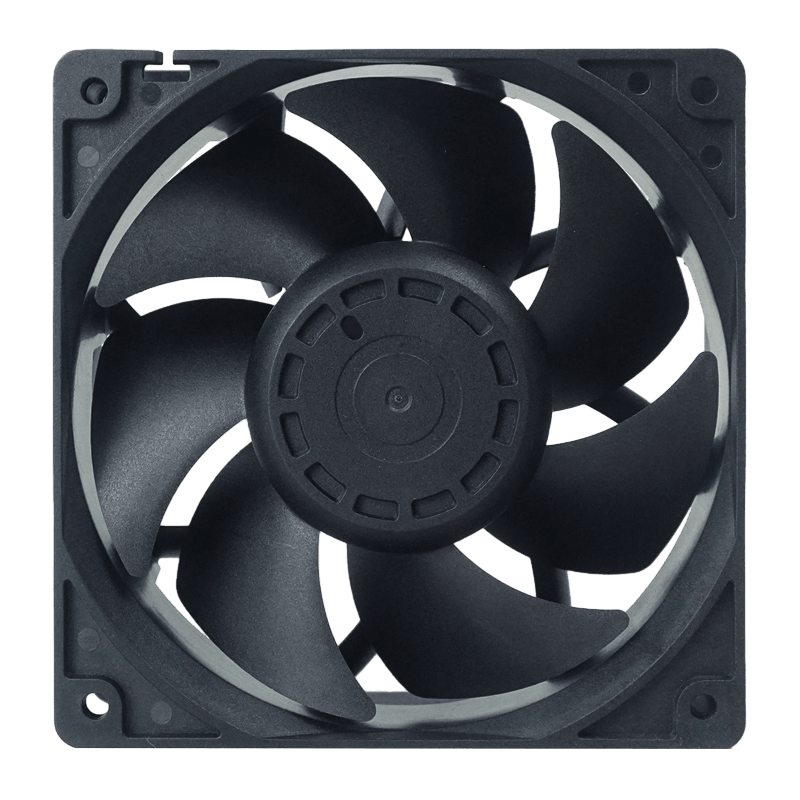
EC fans are available in standard frame sizes corresponding to common AC fan dimensions. Popular sizes such as 12-inch, 16-inch, 20-inch, and larger are readily available from multiple manufacturers.
Mounting hole patterns and flange dimensions generally follow industry standards, allowing direct replacement of existing AC fans in equipment.
Airflow performance at full speed is comparable to equivalent AC fans, so replacement typically maintains or improves system performance while reducing energy consumption.
Retrofit Considerations
When replacing existing AC fans with EC models, installers should verify that the control signal wiring is present if variable speed operation is desired. Some existing installations may have only power wiring to the fan.
The low-voltage control wiring should be routed separately from power wiring to prevent electrical noise interference, following standard practices for mixed-voltage installations.
EC fans generate some electrical noise (electromagnetic interference) as part of their switching operation. Many models comply with applicable standards for residential and commercial equipment, but in sensitive applications, additional filtering or shielding may be necessary.
EC fans are generally considered low-maintenance devices, but like all electromechanical equipment, they benefit from proper care and have finite service lives determined by their components.
Maintenance Requirements
The primary maintenance consideration for EC fans is bearing condition. Many EC fans use high-quality ball bearings designed for long life. These bearings are typically sealed and lubricated for life, requiring no periodic regreasing.
Accumulation of dust and debris on fan blades reduces airflow and can cause imbalance, bring about vibration and accelerated bearing wear. Periodic cleaning of blades and housings, using compressed air or soft brushes, maintains performance and extends life.
The electronic components are generally maintenance-free but benefit from clean, dry operating environments.Temperatures, humidity, or corrosive atmospheres can shorten electronic component life.
In critical applications, some facilities perform periodic vibration analysis to detect bearing deterioration before failure occurs.
Expected Lifespan
The service life of an EC fan varies significantly with application conditions. Key factors include operating temperature, duty cycle, mounting orientation, and environmental cleanliness.
Typical L10 life ratings (the time by which 10 percent of a population can be expected to fail) for EC fans range from 40,000 to 70,000 hours at rated conditions. This corresponds to approximately 4.5 to 8 years of continuous operation.
Fans operating at reduced speeds typically achieve longer life than those running continuously at full speed, due to lower bearing stress and reduced heat generation.
In practice, many EC fans in moderate environments exceed their rated life, operating reliably for 10 years or more before replacement is required.
Failure Modes and Troubleshooting
The common failure mode is bearing deterioration, indicated by increasing noise or vibration. When bearings fail, the fan typically becomes noisy before ceasing to rotate.
Electronic component failure is less common but can occur, particularly if the fan is subjected to voltage surges or temperatures. Electronic failure may result in complete non-operation or erratic speed behavior.
Before replacing a suspected failed fan, basic troubleshooting should verify that power is present, control signals are correct, and the fan rotor turns freely without obstruction. Some EC fans include LED indicators that provide diagnostic information about operating status.


 Juanqiao Industrial Zone, Jinqing Town, Luqiao District, Taizhou City, Zhejiang Province, China.
 +86 - 18005764580
 [email protected]
© 2023 Zhejiang Meixing Mechanical and Electrical Co., Ltd. All rights reserved.
