
 English
 中文简体
中文简体 عربى
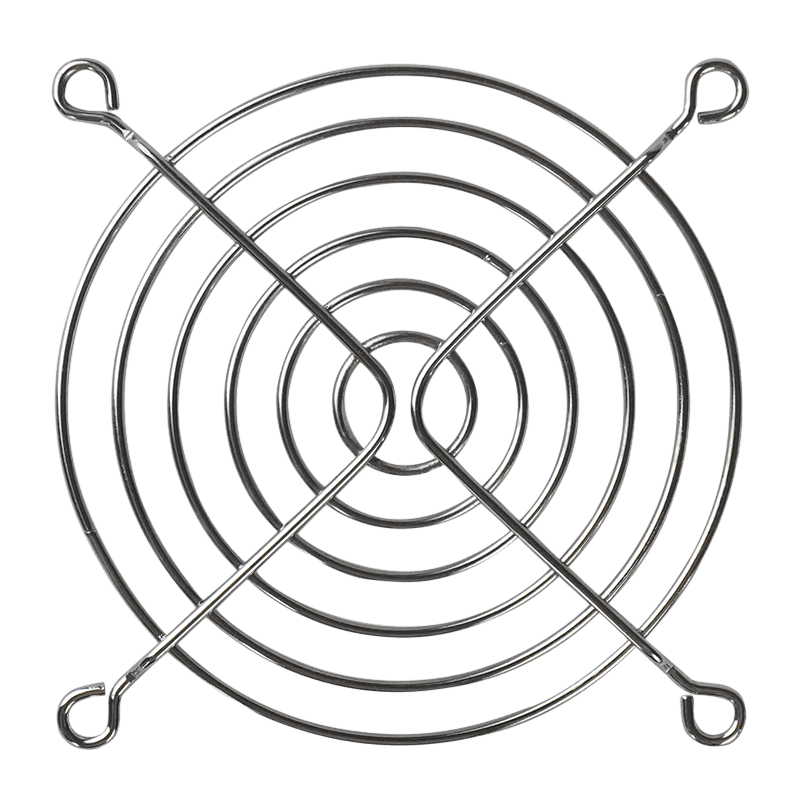
عربىFan Iron Cover
The Fan Iron Grill Guard serves as a critical accessory, prioritizing safety and func...
The primary differences relate to the power supply, motor design, and control methodology. A 220V AC fan is designed to operate directly from a standard mains power outlet or distribution panel in regions where 220-240V at 50Hz or 60Hz is the norm. Its motor is a single-phase induction motor or a shaded-pole motor, which is inherently simple and robust. Speed control for these AC fans is less straightforward than for DC fans; it typically requires altering the input voltage with an external transformer or a triac-based speed controller, which can reduce torque and cause humming at lower speeds.
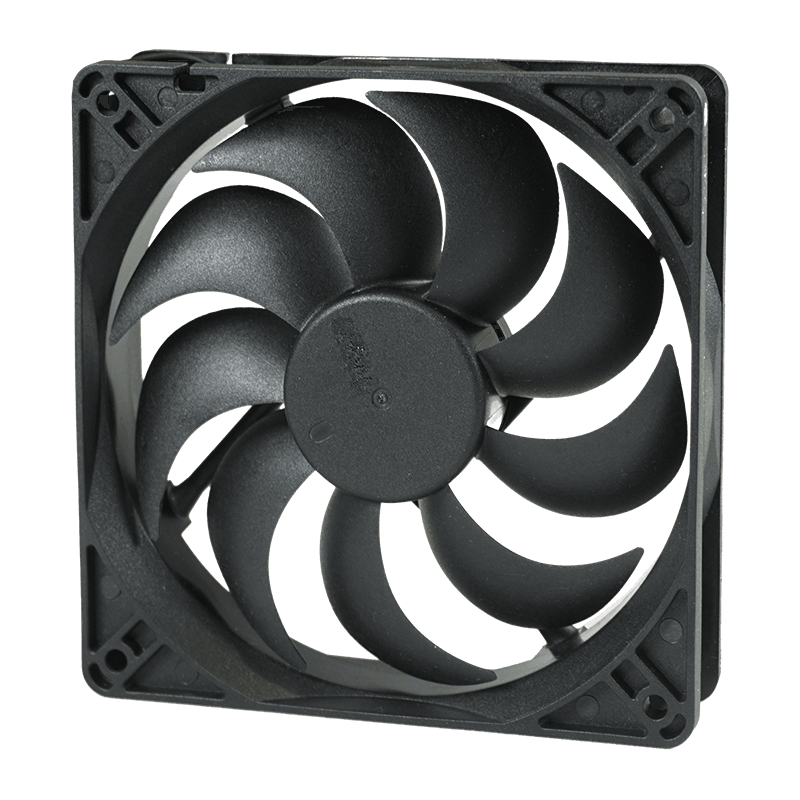
In contrast, a 12V or 24V DC fan uses a brushless DC (BLDC) motor and requires a power supply to convert AC mains to stable DC voltage. DC fans generally offer more efficient and precise speed control via Pulse Width Modulation (PWM) signals. A 110V AC fan is designed for the North American and some other grids; its internal motor windings are designed for the lower voltage. Using a 110V fan on a 220V circuit will damage it, while using a 220V fan on a 110V circuit will cause it to run very slowly or not start. The choice is fundamentally dictated by the available power source and the need for speed controllability.
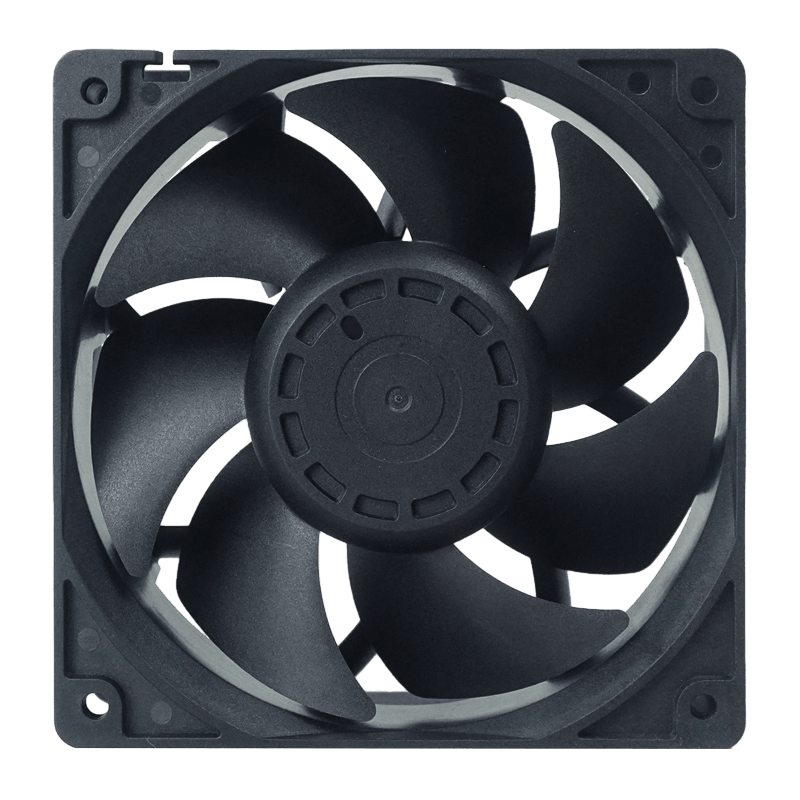
Selection is based on matching the fan's published performance curve to the thermal and physical requirements of the application. The two critical parameters are airflow, measured in cubic meters per hour (m³/h) or cubic feet per minute (CFM), and static pressure, measured in Pascals (Pa) or inches of water column. Airflow indicates the volume of air the fan can move in free air (no restriction). Static pressure indicates the fan's ability to overcome resistance, such as from filters, dense heat sinks, or long ducts.
To select a fan, one must estimate the system impedance. A simple exhaust application with a grille has low impedance and requires high airflow. Cooling a component through a restrictive heat sink or a filter requires a fan that can deliver adequate airflow at a higher static pressure point on its performance curve. Other important parameters are size (standard square or round frame dimensions, e.g., 120mm x 120mm), noise level (measured in decibels, dBA), and the fan's rated speed (RPM). Choosing a fan that operates near the middle of its performance curve for the calculated system impedance, often results in more reliable and quieter operation.
Failure modes are typically mechanical or environmental. The common cause is bearing failure. AC fans often use sleeve bearings or ball bearings. Sleeve bearings can wear out or dry up, bring about increased noise and eventual seizure. Ball bearings can fail due to contamination or loss of lubrication. Prevention involves selecting fans with rated bearing life suitable for the operating temperature and ensuring the environment is as free of dust and debris as possible; in dirty environments, fans with sealed bearings or external protection are advised.
Motor burnout from overheating is another failure mode. This can occur if the fan is obstructed (by debris or a failed bearing), causing the motor to stall and overcurrent. It can also happen if the fan is used in an ambient temperature exceeding its rated specification, which is often between -10°C and +70°C. Ensuring adequate clearance for airflow and selecting a fan with a suitable temperature rating are preventive measures.
Electrical issues include failure of the internal starting capacitor in capacitor-run motors, or insulation breakdown from moisture or voltage spikes. Using fans in their specified voltage and frequency range (e.g., 220V/50Hz) and, for outdoor or washdown use, selecting fans with appropriate ingress protection (IP) ratings can mitigate these risks. Regular cleaning of inlet grilles and heatsinks to prevent blockage is a basic but effective maintenance practice.
An IP (Ingress Protection) rating, defined by the international standard IEC 60529, classifies the degree of protection a fan's enclosure provides against solid objects and liquids. It is expressed as "IP" followed by two digits (e.g., IP54). The digit indicates protection against solids: 5 means dust-protected (limited ingress permitted, no harmful deposit), and 6 means dust-tight. The second digit indicates protection against liquids: 4 means protection against water splashes from all directions, and 5 or 6 mean protection against low-pressure or powerful water jets, respectively.
These ratings are necessary when the fan operates in environments where contamination or moisture is present. A standard IP20 fan (finger-safe but not sealed) is suitable for clean indoor electrical cabinets. An IP54 or IP55 fan is used in industrial settings where dust and occasional moisture splash are present, such as in food processing or washdown areas. An IP68 fan can withstand temporary immersion and is used in harsh outdoor or marine applications. Selecting a fan without an adequate IP rating for a demanding environment will likely bring about premature failure from corrosion, short circuits, or bearing contamination.


 Juanqiao Industrial Zone, Jinqing Town, Luqiao District, Taizhou City, Zhejiang Province, China.
 +86 - 18005764580
 [email protected]
© 2023 Zhejiang Meixing Mechanical and Electrical Co., Ltd. All rights reserved.
